
Dreaming the future, all the time by Robert Moss
 Our dreams are constantly coaching us for challenges and opportunities that lie ahead of us on the road of life. It’s possible that we rehearse everything that will take place in the future in our dreams, though we forget most of it.
Across human evolution, dreaming has been a vital survival mechanism. It is likely that in the days when our ancestors were naked hominids without good weapons, their dream radar — their ability to scout across both space and time — often enabled them to avoid becoming breakfast for saber-toothed tigers and other hungry predators.
A recent theory posits that dreaming prepares us for challenges by putting us through frequent workouts in threat simulation, helping us to develop the reflexes and responses that will get us through.
This is good, but I suspect our relationship with the future in dreams is much deeper and more important than this. I believe that in dreaming, we have access to the matrix in which the events and circumstances that will manifest in our physical lives have their origins. We not only see future events; we can choose — to varying degrees, and according to our level of consciousness — which among many possible future events will manifest.
It’s my impression that we are dreaming the future all the time.
If you are not yet aware you are doing this, consider the times you have had the experience of déjà vu. I have yet to meet someone who has never had that feeling of encountering a person or a place for the first time — in ordinary reality — and knowing you have seen them before. Most often déjà vu is experienced when waking events resemble something we have dreamed. We may have forgotten the dream, but when a physical event catches up with it, recognition stirs from a deep memory bank.
If you adopt the practice of recording your dreams and comparing the dream data with subsequent events, it won’t take long for you to notice some match-ups. The incidents you preview in your dreams may be trivial or terrifying, blah or wonderful. They may be events in your own life, or events in the future history of the world.
In our dreams, we have several kinds of engagement with the future.
Precognitive Dreams
Through precognition, we see events and circumstances ahead of time, as they will be played out. A precognitive dream may be literal or symbolic or both. For example, a dream of a tsunami might turn out to be both a preview of a literal disaster and advance notice of an emotional storm that will hit with the force of a tsunami. We may not understand what we have seen in a precognitive dream until a physical event catches up with that dream. It may also be difficult for us to understand what we have seen because we are looking at things from a certain angle, perhaps the perspective of a different person. But with practice, we can learn to recognize markers that a dream relates to future events, and we can then move to clarify and use the dream information.
Such practice becomes very interesting when our dreams show us possible future events that can be changed for the better. We may call such dreams early advisories; they may be early warnings or early signals of coming opportunities.
Early Warning Dreams
Some dreams are early warnings of a possible future problem — a crisis at work, the bust-up of a relationship, a health problem, a car accident. We may not want to focus on any of these unpleasant possibilities. But if we are willing to study what an early warning dream is telling us, we will often find that it is giving us vital information that can help us avoid the problem if we take appropriate action.
Here’s a simple everyday example: Cara dreamed that a good friend pulled up beside her on the right side of her car and pointed at the front right tire, signaling that there was something wrong. On waking, Cara inspected the passenger side of her car — something she was otherwise unlikely to do — and found that the fairly new right front tire was flat. The dream advisory enabled her to take care of the problem immediately and get on her way safely without a major hassle.
Sometimes we dream the future for the benefit of another person, or even of a great cause. What will then happen depends on whether we can find an effective way to get the dream information to the person who can best act upon it.
Early Opportunity Dreams
Early opportunity dreams may also require action if we are going to manifest a future we’ll enjoy. You dream you are in your ideal home, or doing the work that nourishes your soul and your bank account, or you are with your soulmate, who is someone you have not yet met in the regular world. These dreams may be inspiring and encouraging, and you don’t want to let them float away like helium balloons. You’ll want to figure out what practical action you can take to move decisively in the direction of that happy dream.
Any future we can see (in dreams or through wakeful intuition) is a possible future, and we can influence the odds on the manifestation of a specific future event. While it may seem impossible for an individual to change certain future events perceived in dreams — like a natural disaster or death at an advanced age — it may still be possible to work with the dream information in a useful way: for example, to alert friends not to go on vacation in the place where the dreamed hurricane will hit, or to help someone whose death is near, and their family, to meet that situation with grace and closure.
Time Is a Kind of Space
As dreamers, we discover and inhabit the true nature of time, as it has always been known to dream travelers and is now confirmed by modern science. Linear time, as measured by clocks, and experienced in plodding sequences of one thing following another, always heading in the same direction, is an illusion of limited human awareness, at best (as Einstein said), a convenience. In dreaming, as in heightened states of consciousness, we step into a more spacious time, and we can move forward or backward at varying speeds. We can also step off a particular event track onto a parallel time track that may also be a parallel universe.
if we can step outside our consensual hallucinations, we’ll discover that time is actually the fourth dimension of space. As H. G. Wells’ Time Traveler says, with wonderful clarity, “Scientific people know very well that Time is only a kind of Space.”
Viewed from the fourth dimension, past, present, and future are in fact simultaneous and only experienced sequentially because of our mental perception of them. In the dream state the mind is not shackled in this way and is able to move between situations and probable events in the past and future with equal mobility.
But hold on for a minute — doesn’t this mean that though we can travel to the past and future, we can’t change them? That’s how Wells’ Time Traveler views the situation in The Time Machine. He regards our many selves at different moments in time — our baby self, our teen self, our current self, our geriatric self, and so on — as three-dimensional “cross-sections” of our larger four-dimensional identity, “which is a fixed and unalterable thing.”
Much as I love The Time Machine, I must observe that time travel in dreams is more interesting than this. We not only travel to past and future; we travel between alternate timelines. With growing awareness, we can develop greater and greater ability to choose the event track — maybe one of infinite alternative possible event tracks — that will be followed through a certain life passage, or even the larger history of our world.
This may be a case of the “observer effect” operating on a human scale. It is well understood that at quantum levels, deep within subatomic space, the act of observation causes plucks a specific phenomenon out of a bubbling cauldron of possibilities. It may be so, in the cauldron of our dreaming: through the act of observation, we select a certain event track that will begin to be manifested in the physical world. By a fresh act of observation, or re-visioning, we can then proceed to alter that event track, or switch to an entirely different one.
Dreaming is Traveling
Let’s go back in time for a moment. The oldest explanation of why we see the future in dreams is that our consciiosuness travels beyond the body. Listen to this:
“It is in sleep that the soul best shows its divine nature, and sees into the future. This is, apparently, because the soul is most free from the body during sleep.”
The statement is made in Xenophon’s Cyropaedia, composed in the early 4th century BCE. “The Education of Cyrus” is a partly fictional biography of Cyrus II, founder of the Achaemenid Empire, by a hardly less famous Greek historian and military philosopher. It was much admired by Western writers and thinkers in later times; Thomas Jefferson had two copies in his personal library.
A friend and student of Socrates, Xenophon was also a brilliant and much admired general, who came close to capturing Babylon at the head of a Greek mercenary army – the Ten Thousand – in the service of Persia. It’s interesting to have confirmation from this man of thought and action of something that, though well understood in ancient and indigenous cultures, still eludes much Western psychology: dreaming is traveling.
From the more recent past, let us hear from J. B. Priestley. He was inspired by J. W. Dunne’s Experiment with Time to solicit and review hundreds of reports of dream precognition from the general public with the help of the BBC. After reviewing the evdience, he declared in Man and Time that the ability to transcend time in dreams “is not a privilege enjoyed by a few very strange and special people. It is part of our common human lot. We are not – even though we might prefer to be – the slaves of chronological time. We are, in this respect, more elaborate, more powerful, perhaps nobler creatures than we have lately taken ourselves to be.”
Text partly adapted from The Three “Only” Things: Tapping the Power of Dreams, Coincidence, and Imagination by Robert Moss. Published by New World Library.
Photo by RM
Republished by kind permission of the author.
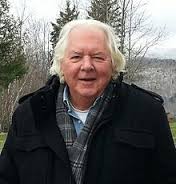 Robert Moss has been a dream traveler since doctors pronounced him clinically dead in a hospital in Hobart, Tasmania, when he was three years old. From his experiences in many worlds, he created his School of Active Dreaming, his original synthesis of modern dreamwork, shamanic journeying and growing creative imagination. He has led popular workshops all over the world, including a three-year training for teachers of Active Dreaming and online courses for The Shift Network. A former lecturer in ancient history at the Australian National University, he is a New York Times bestselling novelist, poet, journalist, and independent scholar. His many books on dreaming, shamanism, and imagination include Conscious Dreaming, Dreamways of the Iroquois, The Dreamer’s Book of the Dead, The Secret History of Dreaming, Dreaming the Soul Back Home, The Boy Who Died and Came Back, Sidewalk Oracles, Mysterious Realities and Growing Big Dreams. He has lived in upstate New York since he received a message from a red-tailed hawk under an old white oak.
His website is http://mossdreams.com and his Substack is https://mossdreams.substack.com/
