In Defense of Food by Michael Pollan – Now a PBS Documentary
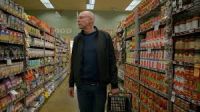
“Eat food. Not too much. Mostly plants.” With that seven-word maxim, US-based journalist Michael Pollan distills a career’s worth of reporting into a prescription for reversing the damage being done to people’s health by today’s industrially driven Western diet. Pollan offers an answer to one of the most urgent questions of our time: What should I eat to be healthy? From www.pbs.org

First published in 2008, In defense of Food is a manifesto for returning to the diet of our grandparents, and avoiding the pitfalls of modern processed foods. Now PBS has released a documentary with the same title, the show features author Michael Pollan as he tours the world in search of healthy food and food cultures, and highlights the problems with agribusiness, the modern grocery store, and the problem of following a “nutrient driven” diet.

From his website, www.michaelpollan.com we read:

Pollan proposes a new (and very old) answer to the question of what we should eat that comes down to seven simple but liberating words: Eat food. Not too much. Mostly plants. By urging us to once again eat food, he challenges the prevailing nutrient-by-nutrient approach – what he calls nutritionism – and proposes an alternative way of eating that is informed by the traditions and ecology of real, well-grown, unprocessed food. Our personal health, he argues, cannot be divorced from the health of the food chains of which we are part.

In Defense of Food shows us how, despite the daunting dietary landscape Americans confront in the modern supermarket, we can escape the Western diet and, by doing so, most of the chronic diseases that diet causes. We can relearn which foods are healthy, develop simple ways to moderate our appetites, and return eating to its proper context – out of the car and back to the table. Michael Pollan’s bracing and eloquent manifesto shows us how we can start making thoughtful food choices that will enrich our lives, enlarge our sense of what it means to be healthy, and bring pleasure back to eating.

Pollan’s last book, The Omnivore’s Dilemma, launched a national conversation about the American way of eating; now In Defense of Food shows us how to change it, one meal at a time.

Check your local PBS station for dates and times.


Health and the Honey Bee by Charles Mraz

| review by C. Tallon

“For centuries, individuals stricken with some debilitating diseases, have been treated with bee stings in order to effectively treat their symptoms.” The life work of Charles Mraz, father of bee venom therapy.

Read More.
Filed Under:

Sidewalk Oracle by Robert Moss

| review by Cheryl Shainmark

Robert Moss’s books are always wonderful — full of mystery and creativity, magic and glimpses of other worlds. But his newest offering, Sidewalk Oracle, seems to be particularly joyful. Sub-titled “Playing with Signs, Symbols, and Synchronicity in Everyday Life,” the emphasis here is on the playing. Filled with enchanting stories, examples of synchronicity, and other “winks” from the universe, the author captures the joy and wonder of being attuned to a broader, deeper reality.

Read More.
Filed Under:

Tasting the Universe: People Who See Colors in Words and Rainbows in Symphonies by Maureen Seaberg

| review by Merlian News

In her book, Tasting the Universe, Maureen Seaberg takes readers on an “Eat, Pray, Love” style exploration of this fascinating, newly discovered phenomenon. Occurring in about 5% of the American population, synesthesia is scientifically described as a cross-wiring, or lack of chemical inhibition, between brain neurons… A violinist sees a scarlet form when he plays a certain note. A rock star sees waves of blue and green as she composes a ballad, while an actress tastes cake when she utters the word “table.” This fascinating mingling of the senses is called “synesthesia,” and the people who possess this amazing gift are called “synesthetes.”

Read More.
Filed Under:

Feeling Great: Creating a Life of Optimism, Enthusiasm and Contentment

| by Dadi Janki, Peter Vegso, and Kelly Johnson

In an excerpt from Feeling Great: Creating a Life of Optimism, Enthusiasm and Contentment by Dadi Janki, Peter Vegso, and Kelly Johnson, the authors write: Optimism opens a door in difficult or hopeless situations. Optimism knows that there is always a way, no matter how many doors have been shut, and it believes that there is always a good alternative. No matter what the crisis, an optimistic outlook will tell you that the situation you are facing is a sign that you need to find a different way of thinking or a new way of doing things.

Read More.
Filed Under:

Retreats In Print – Vol.1:Spirit Guides & Invisible Influences

| review by Cheryl Shainmark

Stephen Thomson and Michael Guarino have done readers a real service in Retreats In Print. Based on years of notes and anecdotes from their live workshops and retreats, Volume 1, “Spirit Guides and Invisible Influence,” is a treasure trove of knowledge about our guides, their purpose, how to learn more about them and how some may move into or out of our lives over time based on our interests and what’s happening in our lives.

Read More.
Filed Under:

Altered Genes Twisted Truth by Steven Druker

| by Dr. Mercola

In his latest newsletter, Dr. Mercola interviews Steven Druker, author of Altered Genes, Twisted Truth, a fascinating new book describing how GMOs came into being and have been allowed to permeate our food supply through illegal means and without legally required safety testing. From the article on www.mercola.com , “On January 24, a statement signed by 300 scientists, researchers, physicians and scholars was published in the peer-reviewed journal Environmental Sciences Europe, 1 asserting that there is no scientific consensus on the safety of GMOs. Moreover, the paper… states that the claim of scientific consensus on GMO safety is in actuality ‘an artificial construct that has been falsely perpetuated.’ The paper also notes that such a claim ‘is misleading and misrepresents or outright ignores the currently available scientific evidence and the broad diversity of scientific opinions among scientists on this issue.'”

Read More.

The Making of a Mystic by Paddy Fievet, PhD

| by Staff

In an excerpt from her fascinating new book, The Making of a Mystic, author Paddy Fievet writes: “Just as I walked beyond the base of the Mary Magdalene Tower, I noticed the plethora of blooming wildflowers in front of me. Most of them were of a light shade of purple splattered with touches of the color of an early morning sunrise. Each stalk had many flowers upon it, bending and swaying slightly in the easy spring breeze flowing up and down the mountainside. Meandering slightly off my path, I eased down among those wildflowers. For a while, I just sat there, noticing intricate details about each leaf, each stone in the walls, and each flower stalk….”

Read More.
Filed Under:

Bridge Between Worlds — Extraordinary Experiences That Changed Lives by Dan Millman and Doug Childers

| review by Cheryl Shainmark

“This book is a revised edition of a previously released book, Divine Interventions. Stories have been added and removed, giving this volume less of a religious overtone and more of a secular “we can’t explain these phenomena, but we know they exist” emphasis. What all the stories have in common is the idea of transcendent possibilities — the events, interventions and outcomes are fascinating. Readers will enjoy making their own interpretation of each story and no doubt draw inspiration from many of them.”

Read More.
Filed Under:

Shadows on the Path by Abdi Assadi

| review by Cheryl Shainmark

Shadows on the Path offers great insight into the many ways that we sabotage ourselves and it is equally clear on how to get ourselves back on course. Mr. Assadi, a therapist and acupuncturist, has clearly done his own spiritual work and, as is clear from his many revelations and insights, suffered his own mis-steps along the way. His anecdotes and teaching tales are marvelous, and his humility and warmth invite the reader to recognize those snippets of themselves that may still need healing — and that may be the very best recommendation of all.

Read More.
Filed Under: ·